Study Amateur Extra E7B

E7B

PRACTICAL CIRCUITS

Amplifiers: class of operation; vacuum tube and solid-state circuits; distortion and intermodulation; spurious and parasitic suppression; switching-type amplifiers

Log in to record drill results and track this group.

E7B01

For what portion of the signal cycle does each active element in a push-pull, Class AB amplifier conduct?

  1. A More than 180 degrees but less than 360 degrees
  2. B Exactly 180 degrees
  3. C The entire cycle
  4. D Less than 180 degrees
E7B02

What is a Class D amplifier?

  1. A An amplifier that uses switching technology to achieve high efficiency
  2. B A low power amplifier that uses a differential amplifier for improved linearity
  3. C An amplifier that uses drift-mode FETs for high efficiency
  4. D An amplifier biased to be relatively free from distortion
E7B03

What circuit is required at the output of an RF switching amplifier?

  1. A A filter to remove harmonic content
  2. B A high-pass filter to compensate for low gain at low frequencies
  3. C A matched load resistor to prevent damage by switching transients
  4. D A temperature compensating load resistor to improve linearity
E7B04

What is the operating point of a Class A common emitter amplifier?

  1. A Approximately halfway between saturation and cutoff
  2. B Approximately halfway between the emitter voltage and the base voltage
  3. C At a point where the bias resistor equals the load resistor
  4. D At a point where the load line intersects the zero bias current curve
E7B05

What can be done to prevent unwanted oscillations in an RF power amplifier?

  1. A Tune the stage for minimum loading
  2. B Tune both the input and output for maximum power
  3. C Install parasitic suppressors and/or neutralize the stage
  4. D Use a phase inverter in the output filter
E7B06

What is a characteristic of a grounded-grid amplifier?

  1. A High power gain
  2. B Low input impedance
  3. C High electrostatic damage protection
  4. D Low bandwidth
E7B07

Which of the following is the likely result of using a Class C amplifier to amplify a single-sideband phone signal?

  1. A Reduced intermodulation products
  2. B Increased overall intelligibility
  3. C Reduced third-order intermodulation
  4. D Signal distortion and excessive bandwidth
E7B08

Why are switching amplifiers more efficient than linear amplifiers?

  1. A Switching amplifiers operate at higher voltages
  2. B The switching device is at saturation or cutoff most of the time
  3. C Linear amplifiers have high gain resulting in higher harmonic content
  4. D Switching amplifiers use push-pull circuits
E7B09

What is characteristic of an emitter follower (or common collector) amplifier?

  1. A Low input impedance and phase inversion from input to output
  2. B Differential inputs and single output
  3. C Acts as an OR circuit if one input is grounded
  4. D Input and output signals in-phase
E7B10

In Figure E7-1, what is the purpose of R1 and R2?
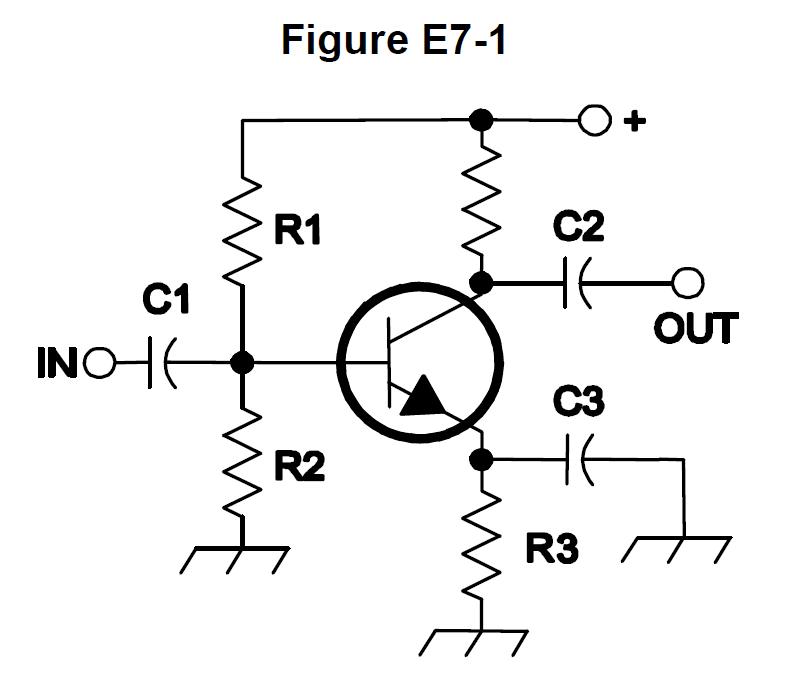
Figure E7-1 from the NCVEC question pool
  1. A Load resistors
  2. B Voltage divider bias
  3. C Self bias
  4. D Feedback
E7B11

In Figure E7-1, what is the purpose of R3?

Figure E7-1 from the NCVEC question pool
  1. A Fixed bias
  2. B Emitter bypass
  3. C Output load resistor
  4. D Self bias
E7B12

What type of amplifier circuit is shown in Figure E7-1?

Figure E7-1 from the NCVEC question pool
  1. A Common base
  2. B Common collector
  3. C Common emitter
  4. D Emitter follower
Tram 1481 Dual Band Base AntennaSponsored · View on Amazon →Yaesu FT-991A HF/VHF/UHF All Mode TransceiverSponsored · View on Amazon →
← E7A All groups E7C →